Gelato?
Mmmm... gelato. Why, you ask? Why not? Everyone loves Gelato.
Is this really "work"? Well, this one is a little different. While my other pages are meant to showcase the work I've done, this is about bringing you on my journey to make gelato. Think of it as a peek into my brain, and an opportunity for you to learn from my mistakes!
Gelato needs no introduction. What does need an introduction, however, is why an engineer has a post about it on his site. Well, let me tell you, food offers no shortage of irresistible opportunities to geek out over the details. And there are many details involved in making the perfect gelato. My hope is that they will shed some light on questions that immediately come to mind when pondering this frozen treat. Questions like: "why doesn't Gelato taste like Gelato unless you're in Europe (read: Italy)?", "why is Gelato sometimes so chewy?", and "how did they make this Gelato taste like I'm biting into fresh, juicy blackberries?". I'm on a mission to answer these questions. And with all great journeys, you have to start somewhere:
Looks easy enough right? Only problem: no recipe. Oh, and no fancy ancient gelato machine from the 1920s.
No matter. Let's get some help from the web: Gelato Recipe & Gelato Calculator
From the recipe, we see that even without a gelato machine "the result is still exceptional!". Phew. And the calculator gives us some much needed structure to start thinking about the different types of ingredients and how they interact. Also, we get some info about how much fat gelato should have: ~4-8%.
I promptly copied it. Here's the recipe I ended up going with:
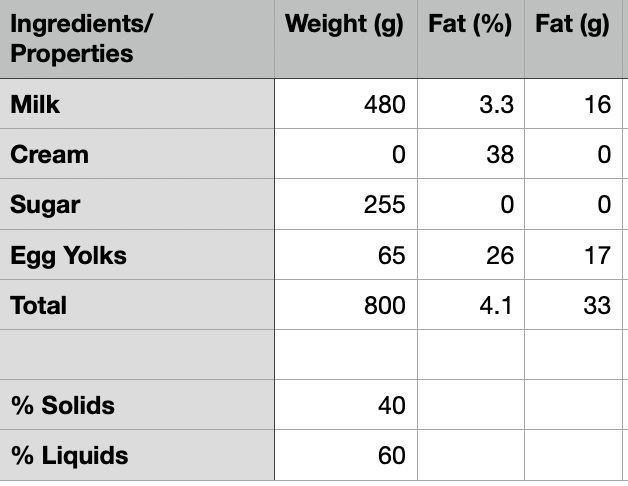
Now you may be wondering how I came up with the weights of each ingredient to add. Not using cream was a requirement since it wasn't featured in the original video. But we need some more constraints to zero-in on the perfect ratios. Enter Carpigiani Gelato University. This video is cheesy in the best way possible, and it definitely feels like it's made by the gelato mafia, assuming that's a thing ("gelato can be served as a PIE" and "it's a true alternative to a complete meal" ... okay), but I love it regardless since they include some great info:
My main takeaway? The "correct" mixture will be made up of 40% solids and 60% liquids.
I also read that lower fat content gelatos tend to be less fluffy (full of air), and I love rich flavors, so I aimed for that lower bound: 4%. With the recipe in hand, I bought the ingredients:
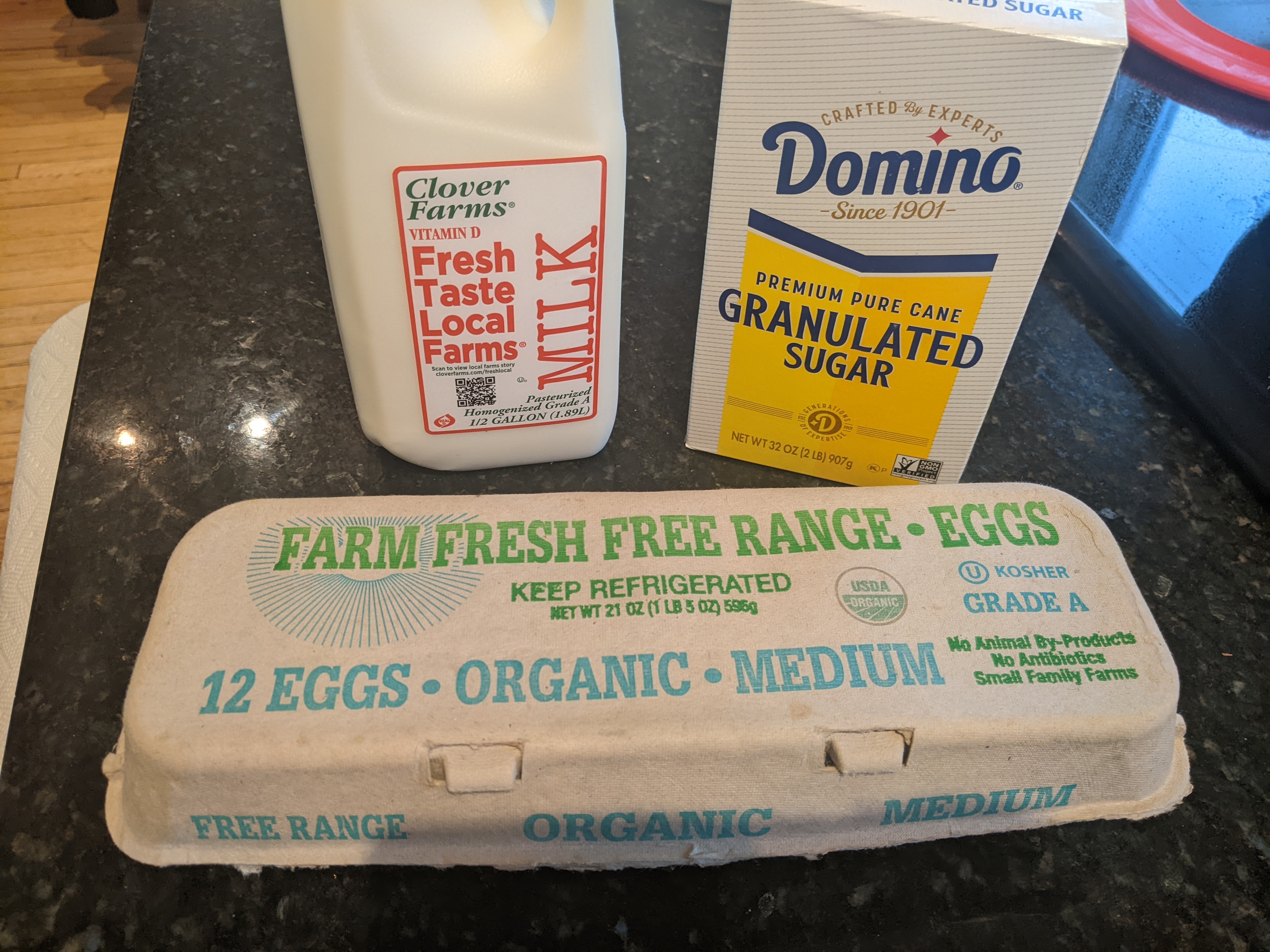
You may have noticed I indicated 3.3% milk fat for the whole milk. I always thought it was 4%, but dissecting the nutrition label and doing some basic math indicated otherwise. Here's the label if you're curious:
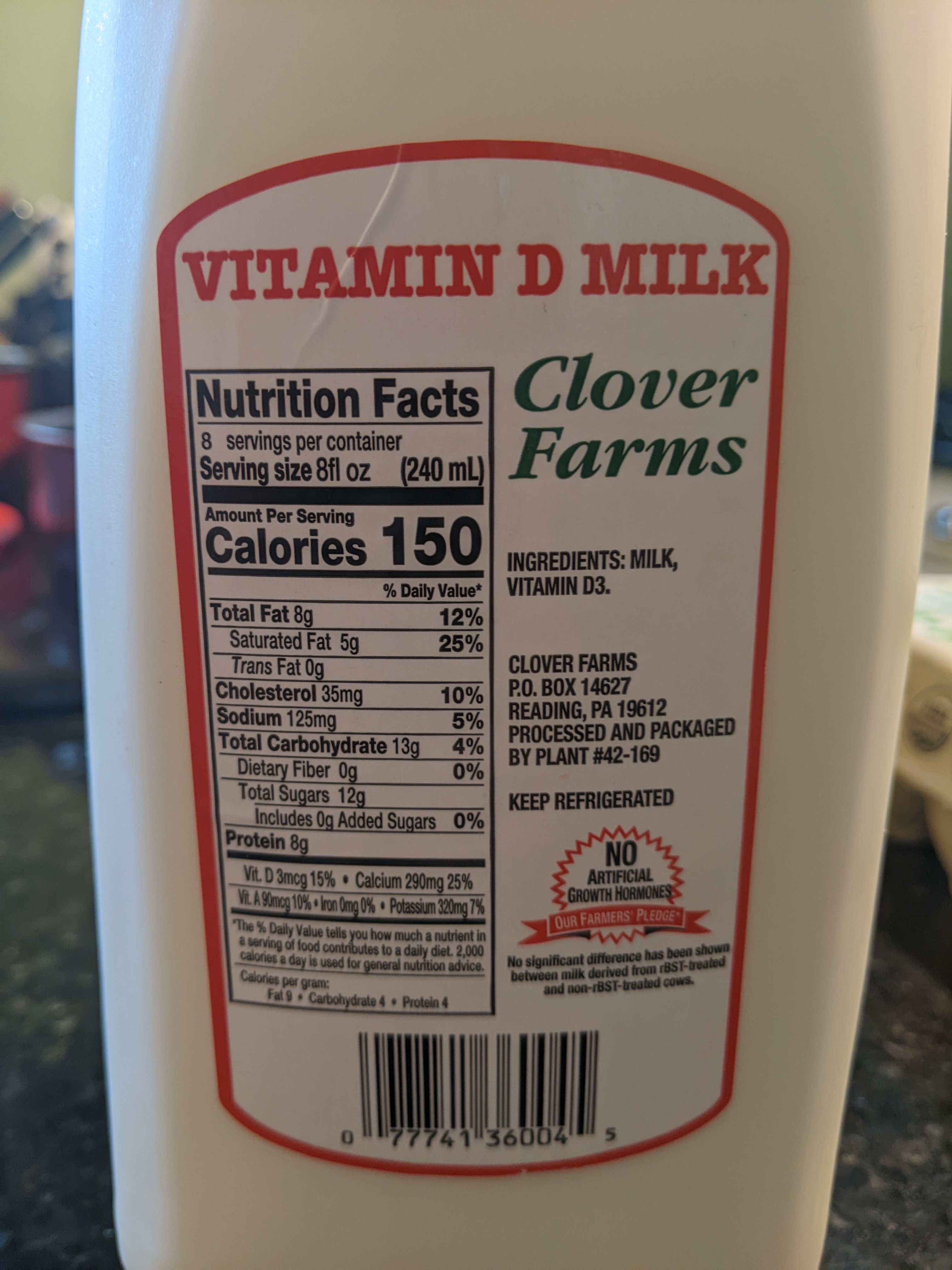
So with that, our recipe is constrained. If we want 40/60 solids/liquids and a fat content of 4%, this is pretty much the recipe we get. You can play with the amount of eggs vs. sugar, but comparing to other recipes online, this already looks really sweet. We could reduce the sugar, but then we're looking at even more eggs (this is already 5!). Looking at the original video, any more looks like overkill.
So, with that out of the way, I got started. I just followed the original video, and augmented it with details from the recipe when needed. Here's what it looked like after mixing the sugar and eggs:
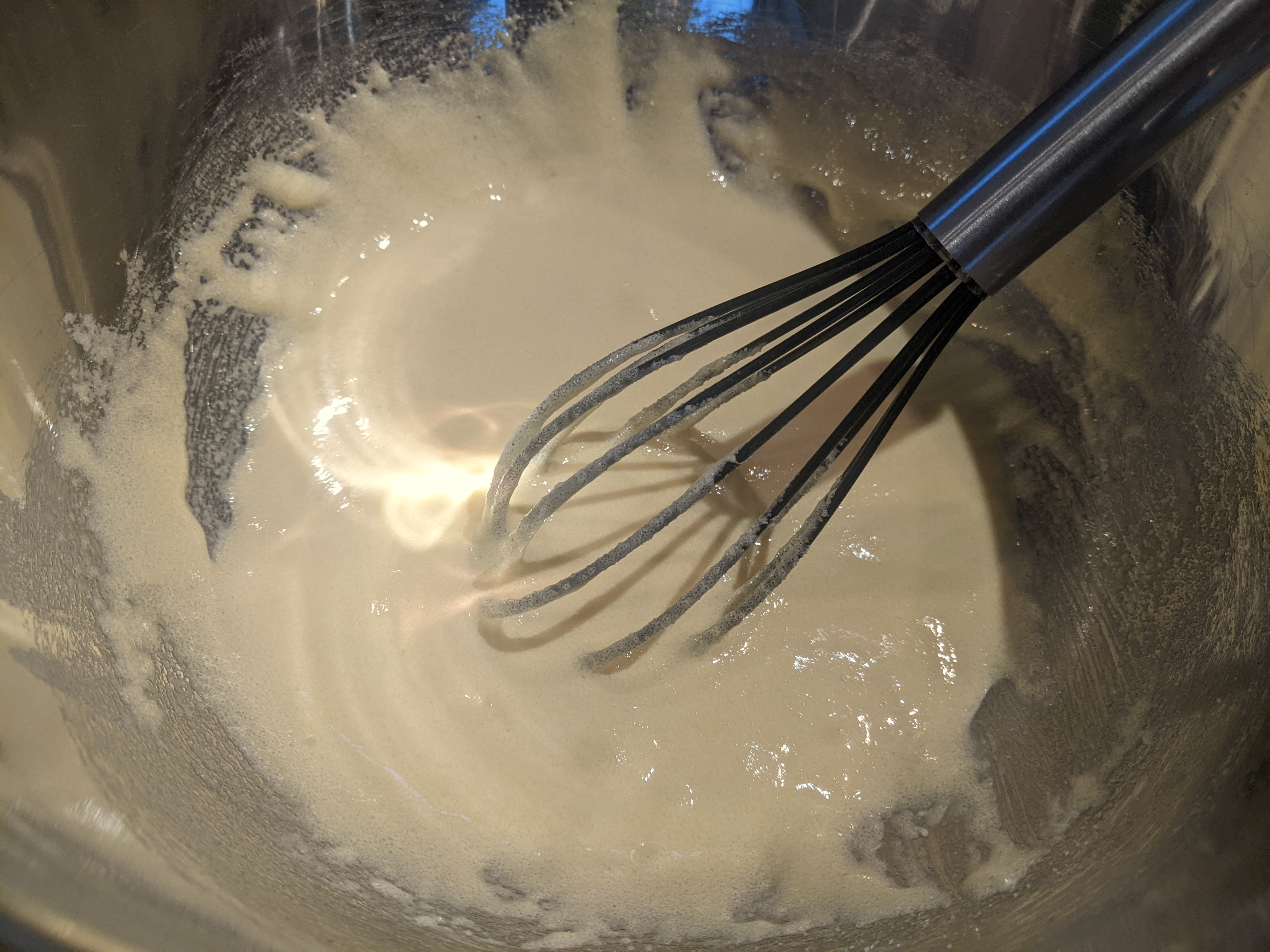
And after adding the milk:
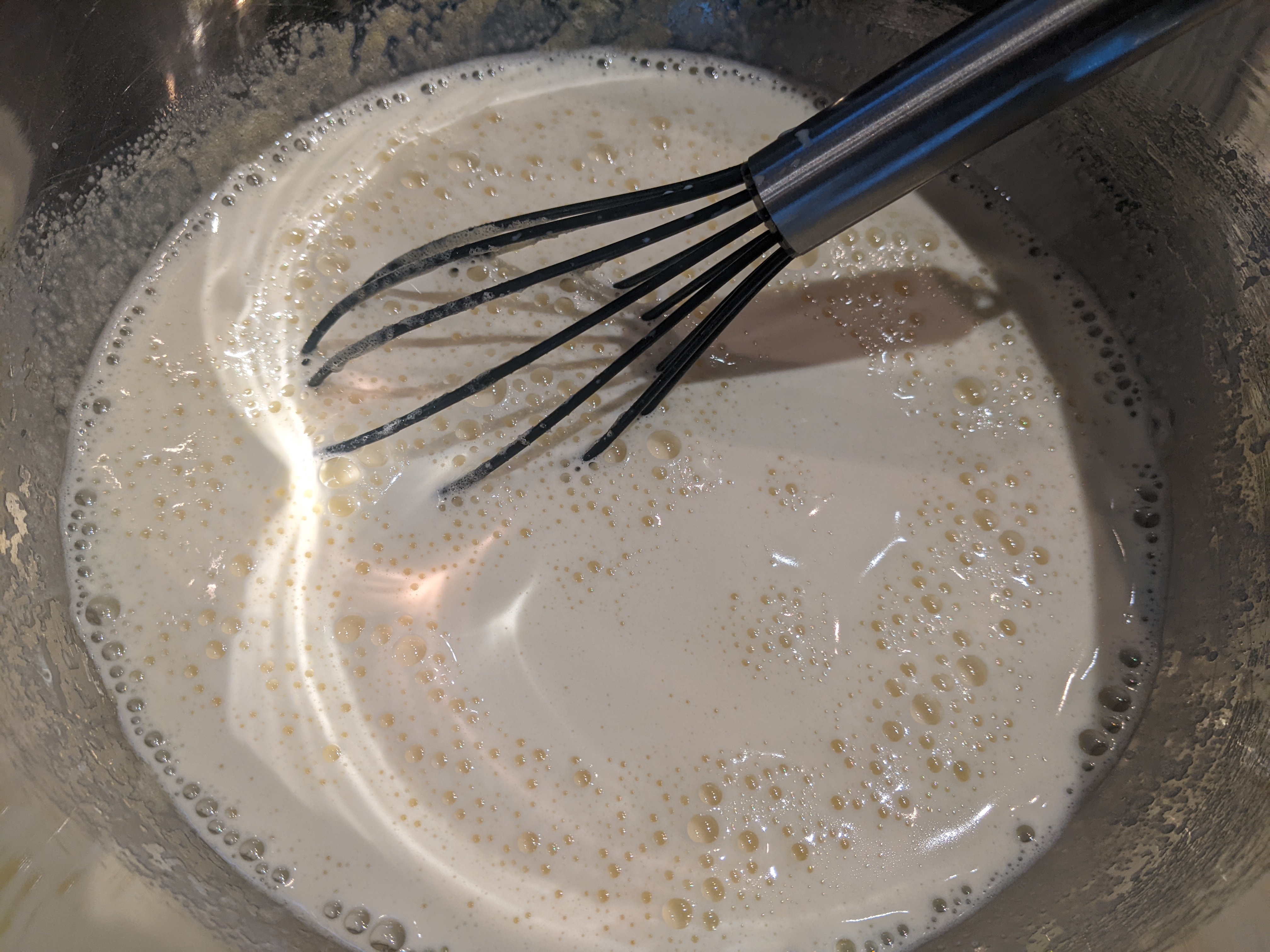
Here's what it looked like after it was cooked:
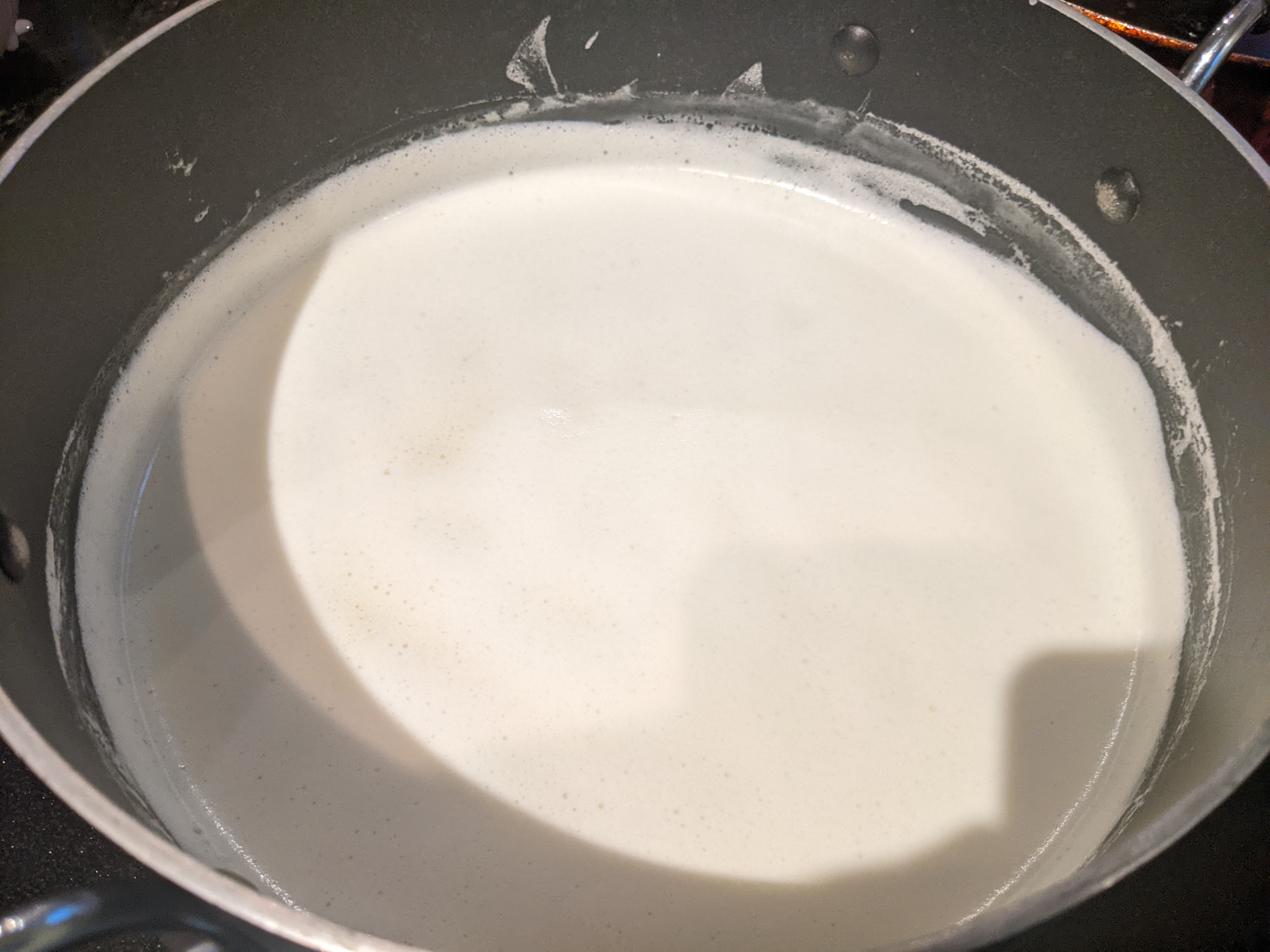
And this is it in my banana bread tin, ahem, gelato bowl:
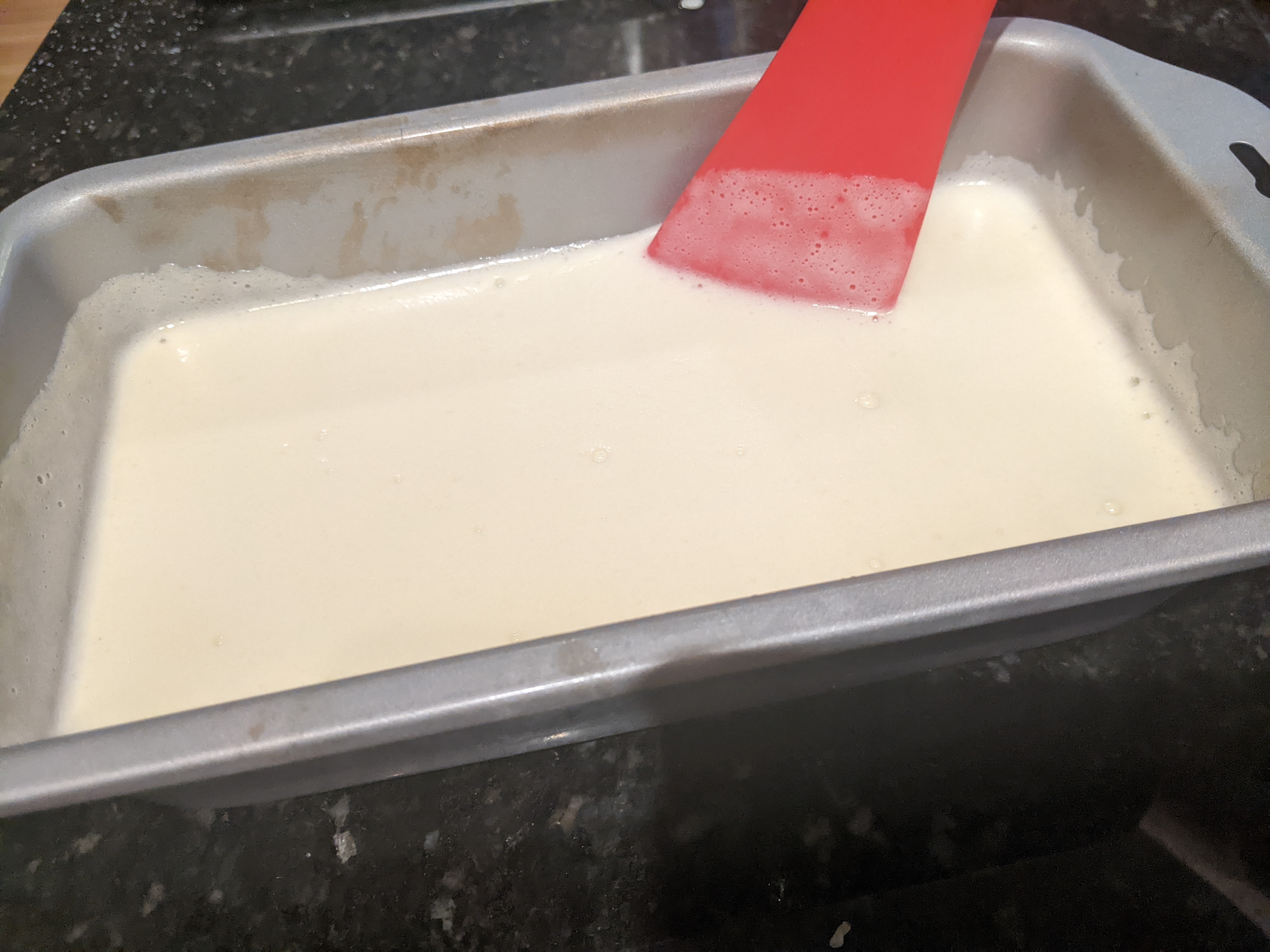
After 5 hours in the freezer and loving mixes every 30 minutes (this thing is NEEDY), it was done! Kind of. It actually was pretty melty still, but when I woke up the next morning it was truly frozen:
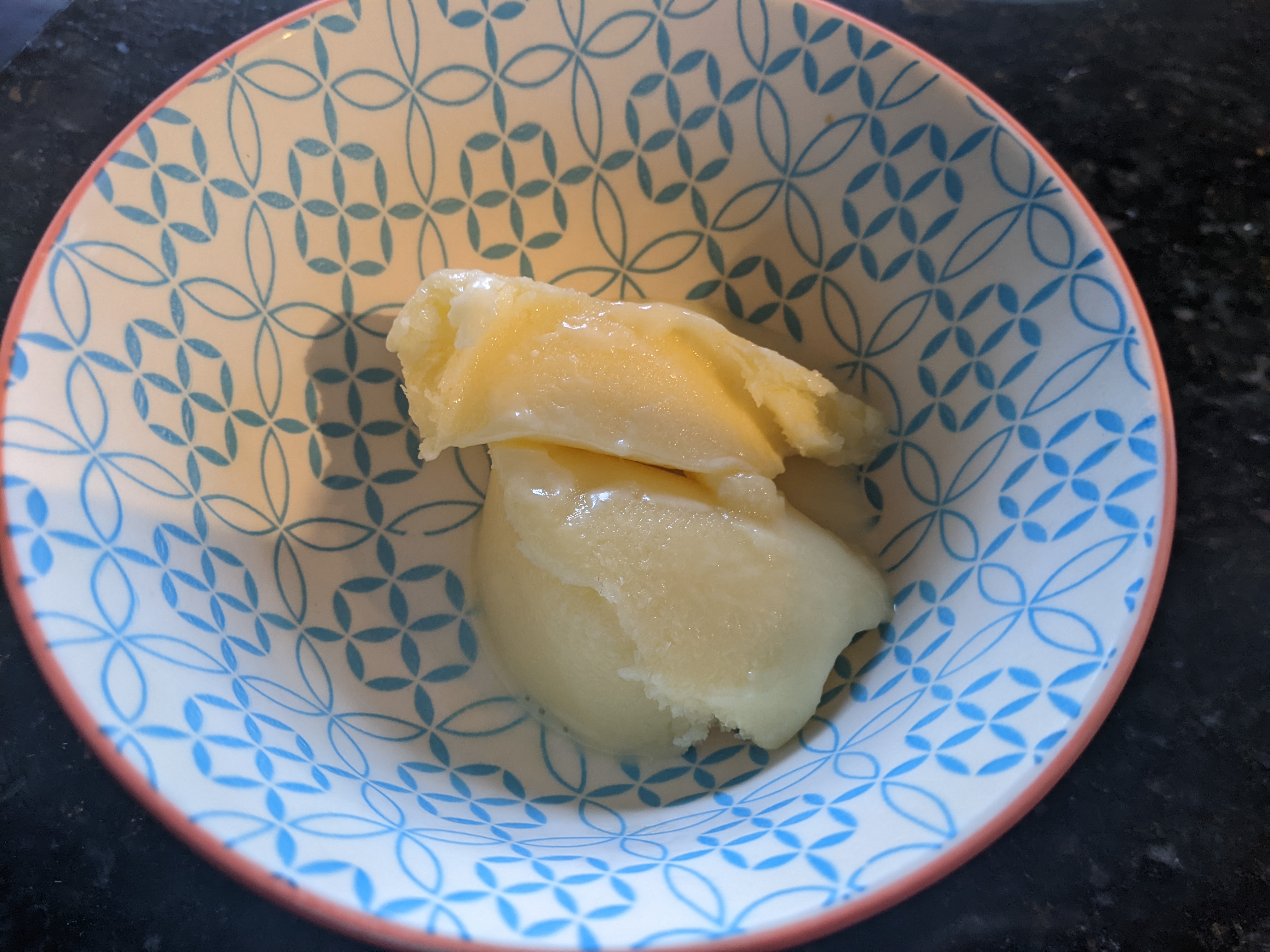
Here's what a cross-section looks like :) (for those of you who haven't put two and two together, I did have gelato for breakfast):
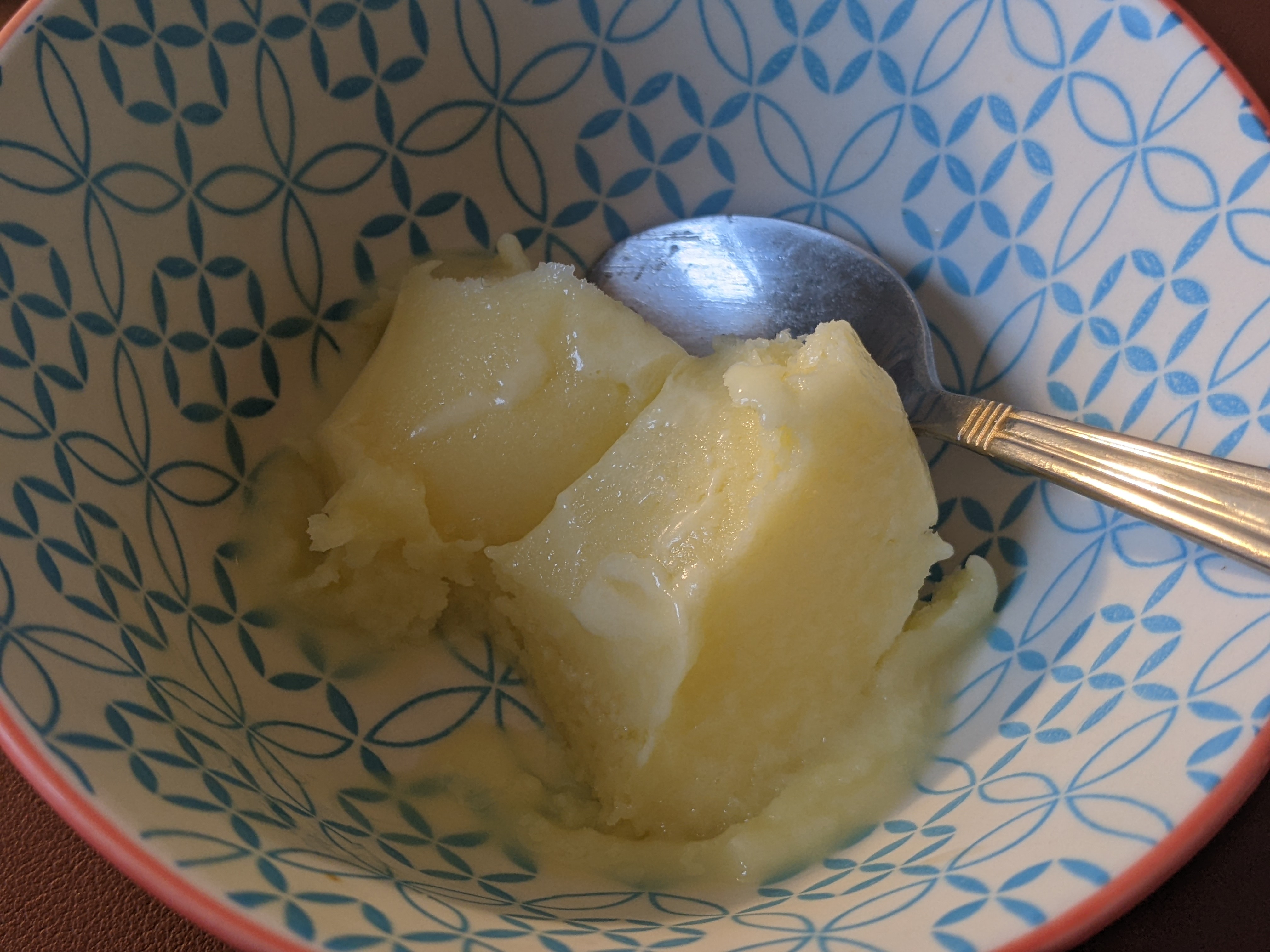
Verdict? Honestly, it was pretty tasty and it looked more-or-less like gelato, so I consider it a win, but there's so much to improve:
1) Eggy. This was like eating egg custard. It was good, but eggier than I would've liked, and I expected more of a milky cream flavor.
2) Sweet. This was really sweet. Maybe twice as sweet as it needed to be.
3) Texture. Not refrozen-bad by any means, but it felt like there were tiny grains just perceptible at the end of each bite. The sugar maybe? Or maybe related to how it froze?
4) Bite. Not chewy. I like chewy.
5) Density. Very dense. Denser than the gelato I've had in Italy.
So what's next? Well, something doesn't add up. I know it was too eggy and too sweet, but if we reduce those ingredients, our ratio of solids to liquids won't be right. What gives?
It turns out I made some mistakes with my calculator. Maybe you can spot them. But more than that, the recipe in the video included almond paste. Surely the fats in the almonds and the other solids it contributes play a role. Maybe if you're using the bare-bones recipe you need to tweak things a bit...
Round Two - Fight!
So about that calculator... it turns out I was oversimplifying the calculation of solids and liquids. You can't just treat milk as 100% liquid, and egg as 100% solid. A more accurate approach is to breakdown each ingredient into the amount of fat, sugar, protein, and other solids it has. Here's that original recipe, but updated with some new pieces of info, including new targets to try and fix some of the issues mentioned above:
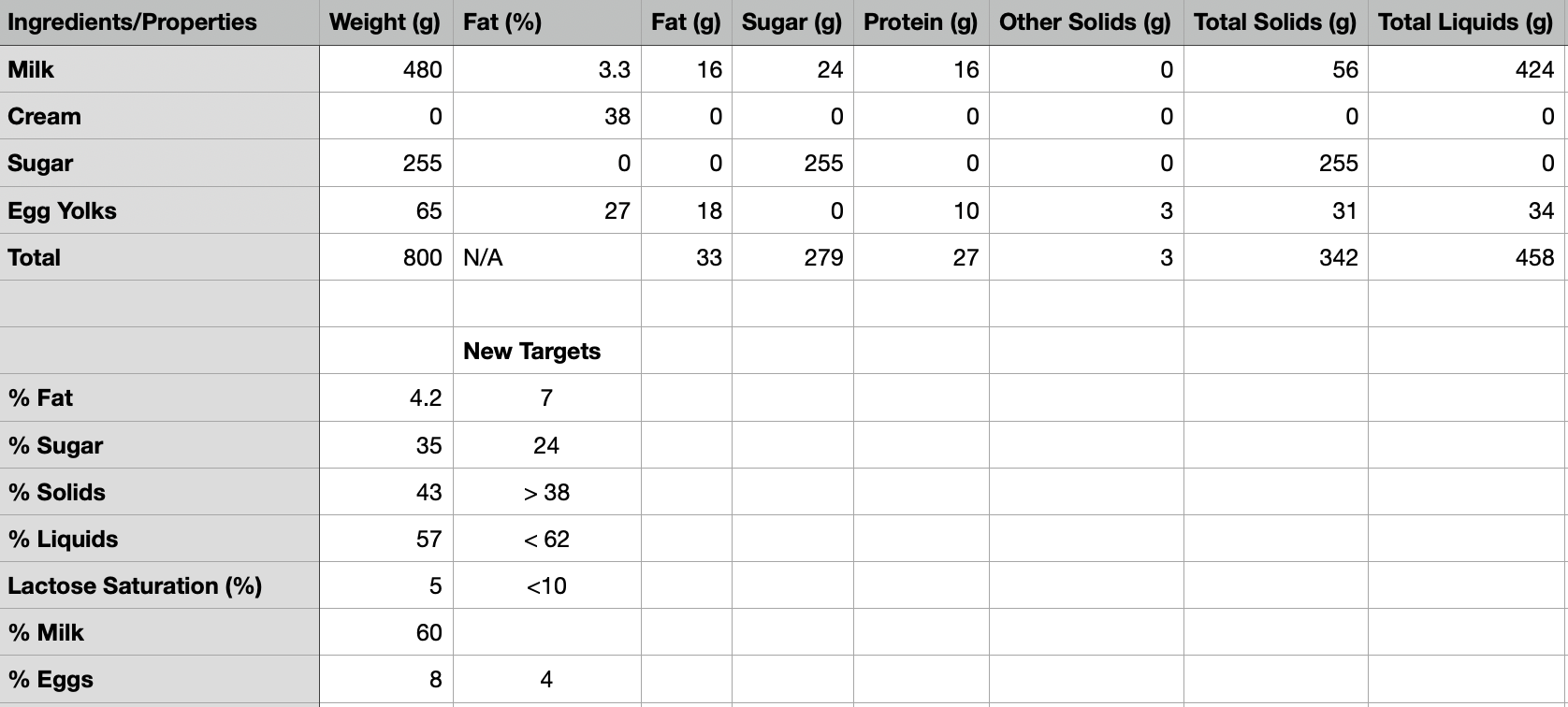
You can see the % solids was actually closer to 43% (vs. 40%), so not a major change, but something to be aware of.
About those targets-- you may be wondering where they came from. After some more digging, I found the following treasure:
There's even a professional gelato calculator! It's featured in the video at 11:15, and you can find it online: GelatoPassport+. With this new information in hand, it's time to try again! Here's the new recipe:
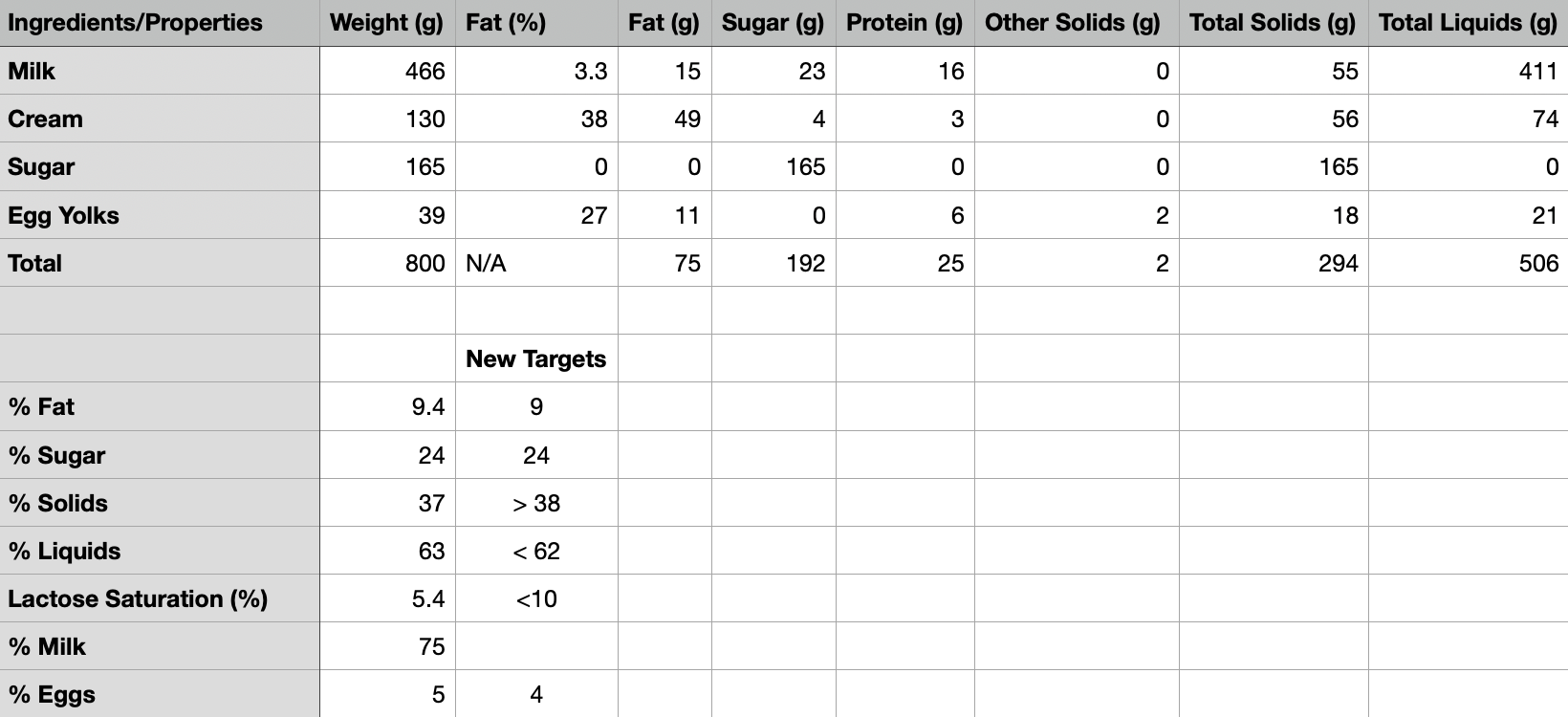
Here are the main changes:
1) Eggs down from 8% to 5%.
2) Sugar down from 35% to 24%.
3) Fat up from 4% to 9%
Hopefully this'll give us a more balanced flavor with a better bite, but there's only one way to find out...
After another 5-6 hour session of freezing and mixing, and another overnight, this is what I got (yes, I had gelato for breakfast again):

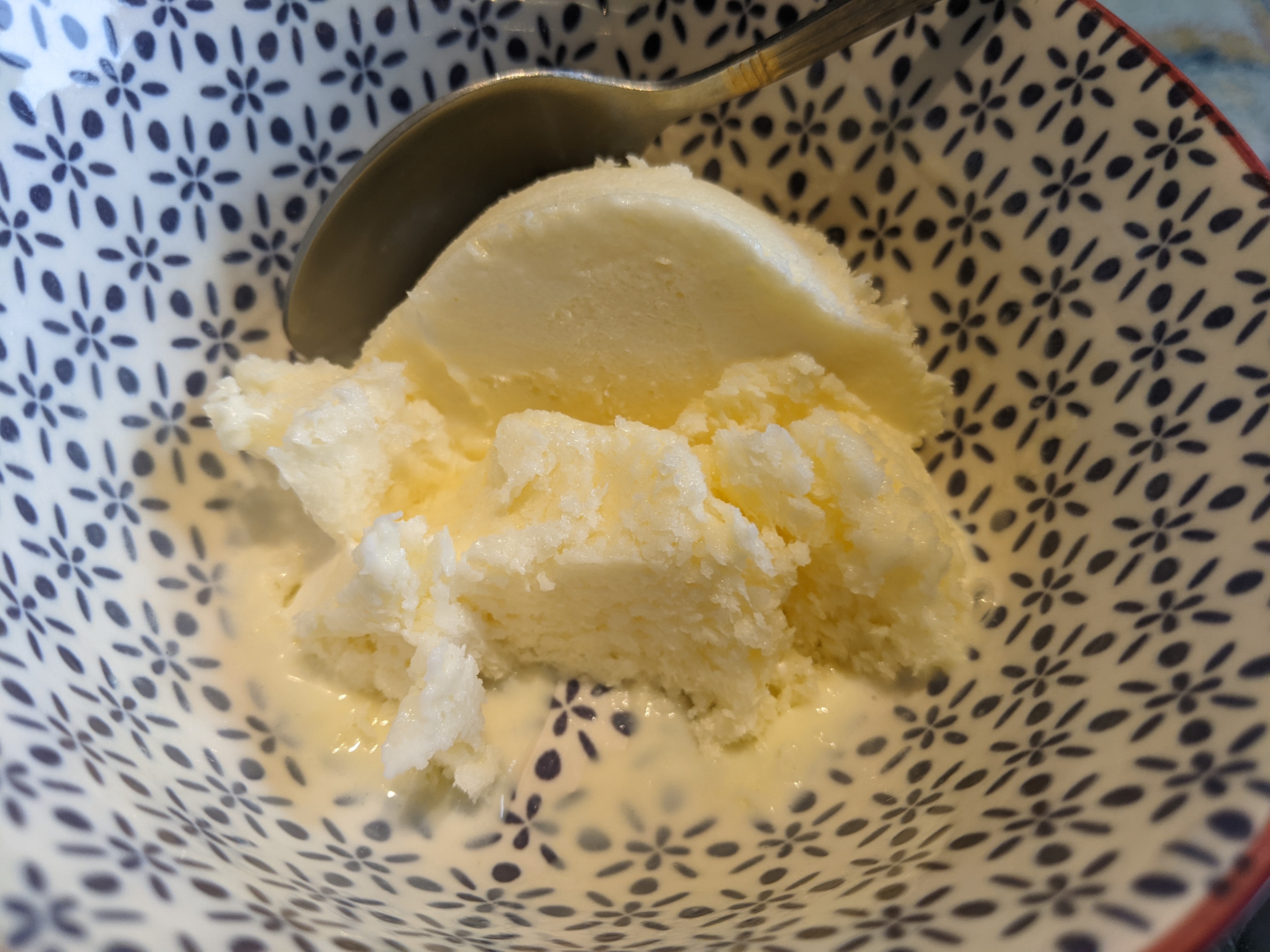
Okay, so let's start with the pros:
1) Much better flavor, with more of a creamy taste and less of an eggy taste.
2) That's it. :_)
The cons:
1) Ice.
2) Ice.
3) Ice.
Yep. This was icy, really icy. Tasty, but icy, and therefore useless as gelato. My theory? This mixing and freezing process isn't cutting it. Combine the fact that we had less sugar in this recipe to inhibit crystal formation, a relatively high % of liquids (more liquids, more ice), and the fact that it took such a long time to freeze the gelato, and it's no surprise we got this result. Seeing as I can't do too much about the sugar or amount of liquid, I need a trick to get this gelato frozen faster. Let's keep things simple and hold the recipe as is. On to round 3...
Round Three
So how do we prevent large ice crystals from forming? There are a few tricks we can use (thank you Serious Eats: Frozen Custard Without an Ice Cream Machine).
1) Increase the portion of fats and proteins to water.
2) Incorporate more air.
3) Speed up the freezing process.
4) Constantly churn the mixture as it freezes.
1 isn't an option given our recipe requirements, 2 is difficult without an electric beater, and 4 isn't practical without an ice cream machine. This leaves us with 3: speed up the freezing process. Seems doable.
With my thinking hat on, I figured the best approach would be to do the following three things: make less (less gelato means less time to freeze), refrigerate the mix overnight (if we're closer to the freezing point without actually freezing, we should need less time in the freezer), and freeze the gelato in an ice cube tray so we increase the surface area to volume ratio during the freezing process.
With the strategy in hand, I set to work. Here's what my first gelato cube looked like:
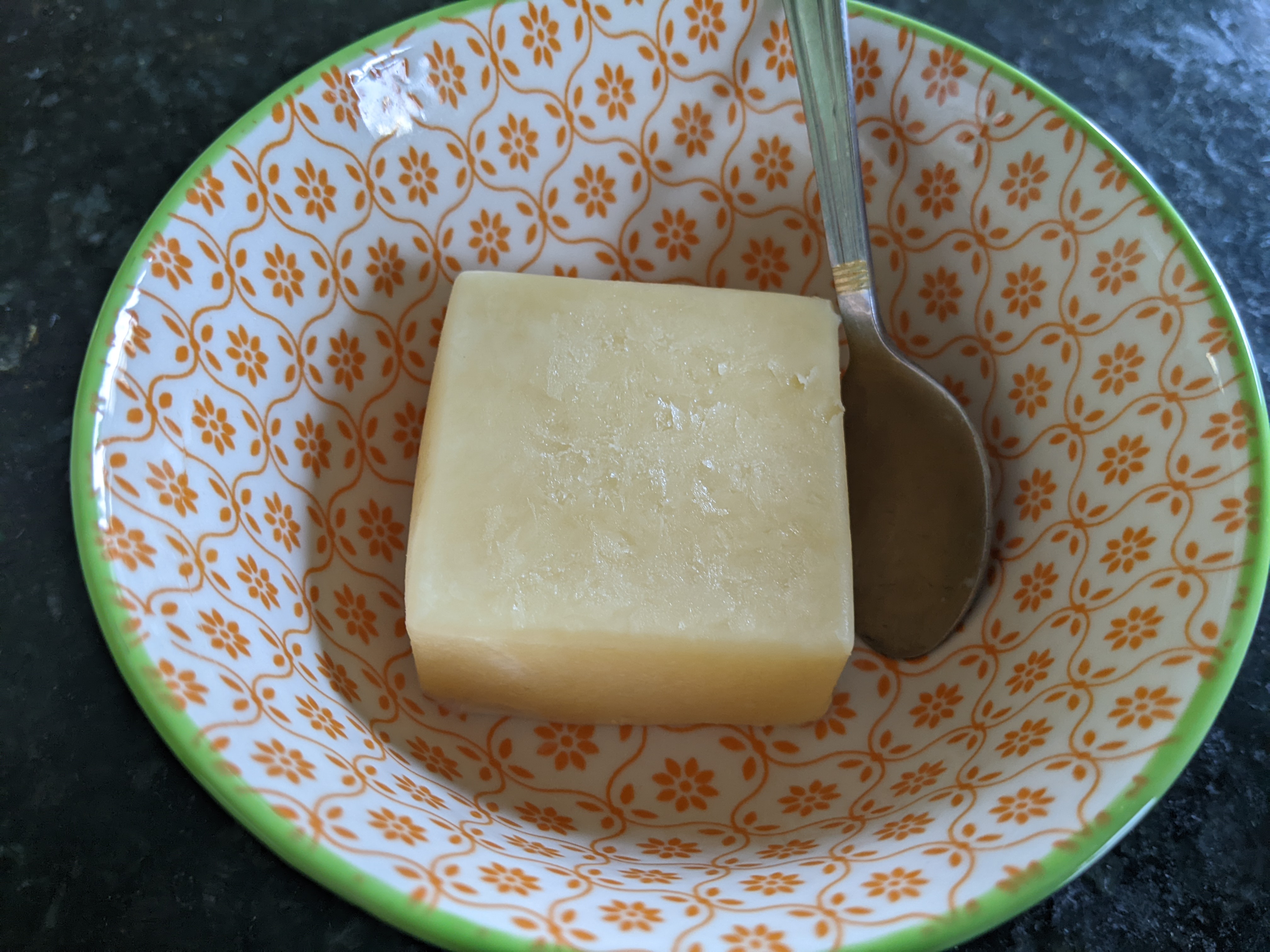
And again after I broke it down and gave it a chance to heat up a bit:
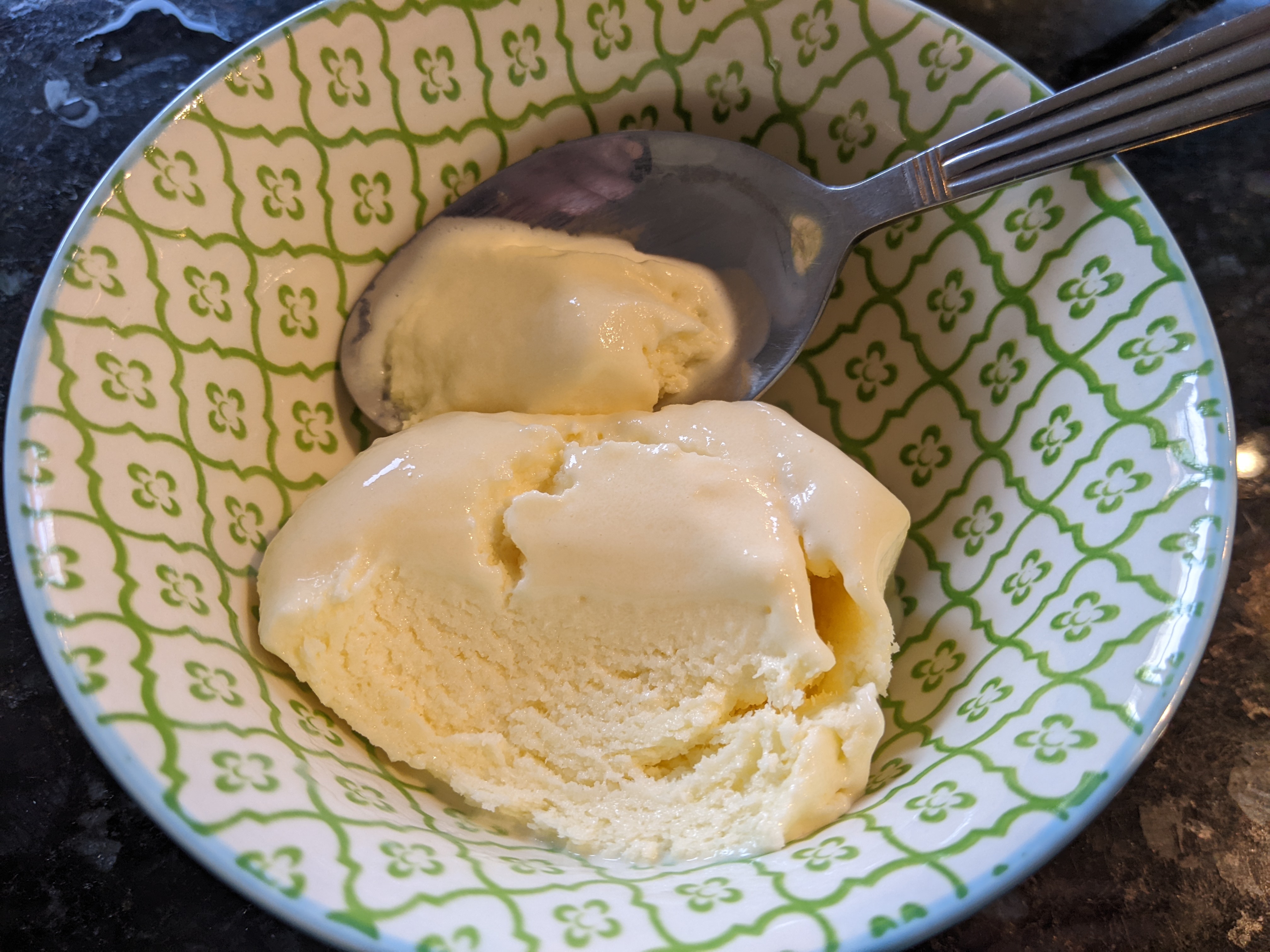
As you can see, it was definitely less icy than the last batch, but still not that dreamy creamy texture I was going for. To get this gelato, I had used a whisky cube tray, so the volume of gelato mix was still quite a bit more than what you'd pour into a single tub in a standard ice cube tray. I poured some extra mix into a smaller, normal ice cube tray, and got even better results, but still didn't get that ideal texture.
Well, this is turning out to be a lot more challenging than I thought. Maybe the trick lies in that ancient machine we saw in the first video that inspired this whole saga. Maybe it's impossible to recreate that delicious, creamy, mouth watering texture without some fancy equipment. Maybe.